

Your Nighttime Routine: How to Truly Wind Down


When we’re laying awake at night, we are quick to find something to blame. It can be all too easy (and fun!) to pin our sleep issues on something external, but in reality, there’s a lot we can do for ourselves.
We need not be resigned to the fate of insomnia or (sometimes just as bad) oversleeping. There are tools we can reach for, and strategies that can really help. That’s where your new nighttime routine comes into the picture.
Let’s learn how to gently ease our bodies into sleep, so we can finally put these issues to bed.
Building a Nighttime Routine With a St. Petersburg Counselor: Why It Matters for Mental Health

Counseling can help you understand why nights are hard for you specifically. For some, nighttime is a quiet reminder of the trauma we carry in our bodies. For others, the coldness and the darkness is a triggering factor for our anxiety and depression. A counselor helps you build a routine that works with your nervous system instead of against it.
What Are The Best Tools For Anxiety Relief At Night?
If our best tools for anxiety treatment are stimulation, distraction, and otherwise winding ourselves up, it’s natural to feel that anxiety more intensely at night. After all, we don’t have a good toolkit for that situation. That’s why one of the things we learn in therapy is how to broaden our toolkit.
Make a quick list of the tools you regularly use to cope with your anxiety, and consider the following questions:
- Do these tools calm my body, or just distract my mind?
- Are these tools sustainable at night, or do they interfere with sleep?
- What does this list look like when I subtract everything that distracts me from the experience of being in my body?
How Can Screentime Disrupt Your Sleep?
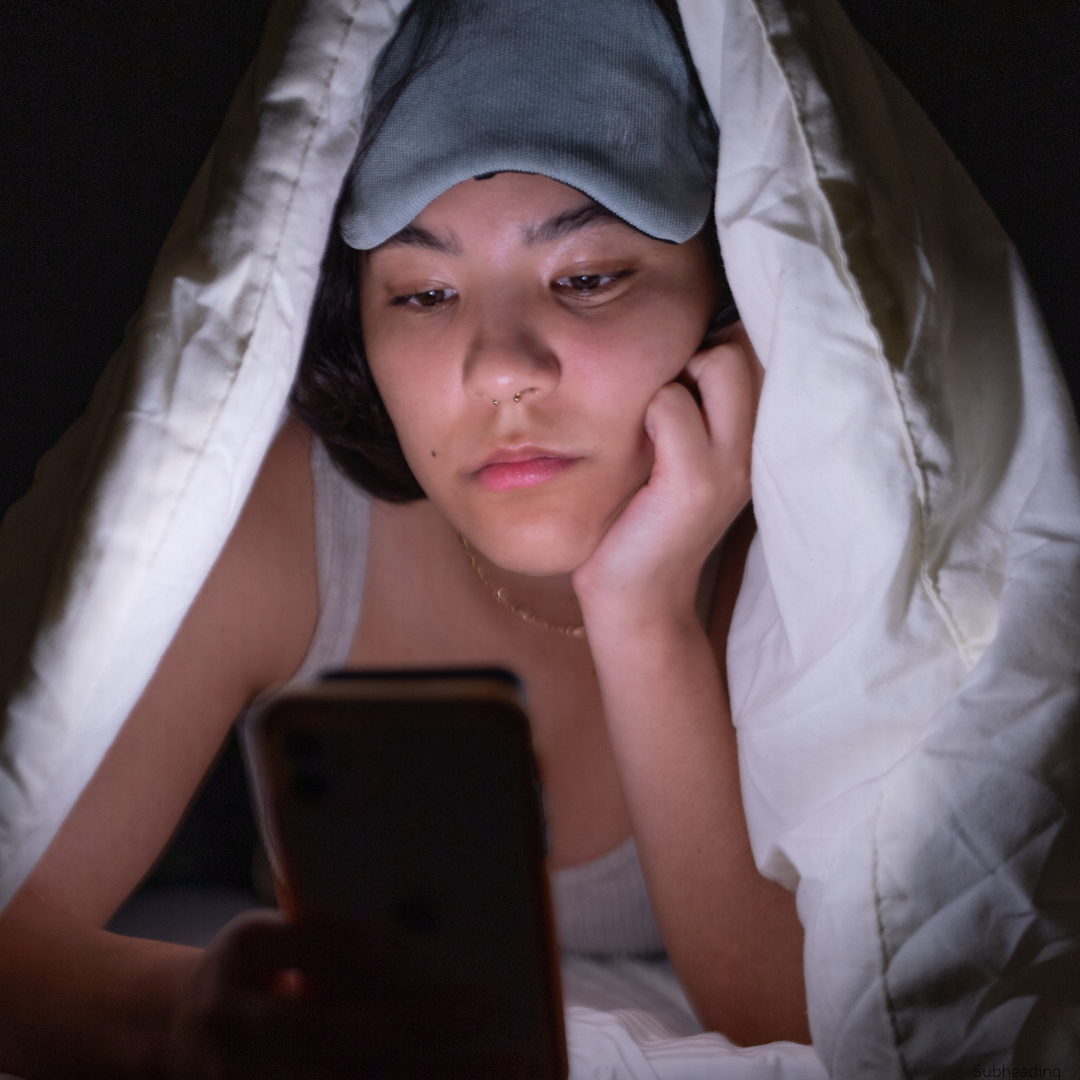
The blue light from our phones, computers, and televisions has a suppressant effect on our melatonin production, especially at night. Although there are settings and filters that can reduce the harm, the fact is that looking at screens in the last few hours of the day makes it harder to fall and stay asleep. This is a fact that frustrates, vexes, and annoys me.
At the end of a long day, we want to indulge (or at least have the freedom to indulge if we want to). Restricting ourselves from the most entertaining and unfortunately addicting thing in our daily lives is probably the last thing on our minds. That’s why we can’t afford to think of this as a sacrifice.
Honor yourself by replacing your screentime at the end of the day with something relaxing and genuinely valuable to you. These are some of the most promising tactics that I’ve experimented with:
- Journaling about your day. Getting your thoughts onto paper gives them somewhere to go so they don’t follow you into bed.
- Doing the dishes. It’s always a good time to start doing the dishes. Just remember to turn off any LED lights in your kitchen because that’s blue light too!
- Reading a book. I’m inclined to believe that the time I spend endlessly scrolling on social media is time that I would have spent reading newspapers and magazines in an earlier time. Philosophically, this is true, but biomechanically, this has sabotaged my circadian rhythm in ways I never could have anticipated. Suffice it to say that reading a real physical paper book for pleasure is a great option for unwinding before bed.
- Quietly practicing a musical instrument. Guitars and pianos tend to work better than tubas or bassinets. Tubas and bassinets are impossible to quietly practice on, and therefore too exciting for bedtime.
How Can Bad Sleep Hygiene Affect My Mental Health?
What is sleep hygiene, and why is it so critical when it comes to our mental health? Well, if dental hygiene is the result of all we do to take care of our teeth, then sleep hygiene is the result of all we do to give ourselves a good night of sleep.
Over time, bad sleep hygiene can:
- Increase irritability and emotional reactivity
- Worsen symptoms of depression and anxiety
- Reduce motivation and concentration
- Make coping tools feel less effective
Improving sleep hygiene isn’t about perfection. It’s about consistency and compassion. When we have a strongly held nighttime routine, it’s a favor we do for ourselves and a pillar of support we can rely on.
Nighttime Routines for Depression Treatment and Depression Relief

Depression often intensifies at night, as this is when distractions fall away and energy is low. Your nighttime routine can keep you on the right track with healthy behaviors even when motivation is scarce.
- Have a set bedtime and wake-up time. Even on weekends. Depression thrives on irregularity.
- Practice self-soothing instead of self-improvement. Sadly, self-work has diminishing returns after 9PM. You don’t have the energy or time to overhaul your life at 9pm.
- Don’t eat right before bed. Digestion can disrupt sleep and worsen restlessness.
- Lower the bar. A “good enough” routine done consistently beats a perfect routine done rarely.
Building a Night Routine That Prevents Burnout
Without sleep, human beings burn out like a campfire full of palm fronds. In the initial spark, we burn twice as bright before running out of energy and receding to our embers.
High-performing professionals often ignore nighttime routines because they feel unproductive. In reality, sleep is what sustains clear thinking, emotional resilience, and long-term leadership capacity. Contrary to popular belief, rest is as productive, if not, more productive and important than work.
Working with a therapist like Alli Cravener can unlock your potential by helping you add fuel to your fire instead of burning yourself out, recognizing your worth outside of how productive or useful you are.
Anxiety Treatment in St. Petersburg: Affordable Counseling For Sleep Issues
Sleep issues can severely impact people’s lives. The effects of sleep deprivation are dire on the brain. Our brains need sleep to repair the cells in our bodies and deep rest helps our brains and bodies be more productive.
Chronic sleep deprivation weakens emotional regulation, increasing irritability, anxiety, and depression. Our sleep can be impacted by underlying trauma and/or burnout. That’s why, when experiencing sleep issues, working with a professional can help. Sometimes, our sleep problems stem deeper in our subconscious than just having issues falling asleep.
Working with a professional can help you process the issues that may be impacting your ability to sleep.
Click here to schedule an initial consultation to get matched with a right-fit therapist.

Sunny Ebsary is an educator, multi-modal artist, and writer specializing in the intersection of myth and mental health. Sunny’s writing walks the line between poetic and logical, giving readers a chance to interface with the mind and imagination. Sunny’s been putting pen to paper since he was a child, writing everything from albums, novels, and plays, to essays, interactive games, and of course, many articles! While studying both psychology and writing, he realized his real passion in life was helping others unlock their creative spark. Whether he’s leading a D&D game, directing a production, or diving deep into the brain, you can be sure Sunny will be ushering you toward finding meaning in your life.
Click here to book a consultation call and start navigating your personal path to mental harmony with a therapist who gets you. Your journey, your pace, your story—let's unfold it together.
Let's keep the conversation going.
Feeling the spark to light up your wellness journey?