

Turn Your Worries Into Gratitude


If you’ve been diagnosed with an anxiety disorder, or have access to global news on your phone, then worry is something you deal with on a constant basis. It is something that cannot be eliminated, and must be accepted.
Living alongside worry does not mean letting your anxiety run your life. It means listening to your worries; letting them give context for your decisions without making your worries into your roadmap.
“Worry isn’t supposed to solve problems. Its job is to send problems to the front of our minds so we know what to fix.”— Reid Wilson, Ph.D., The Surprising Usefulness of Worry
Why We Worry: Does Anxiety Actually Help Us Be Prepared For Stressful Situations?
I know why you’re anxious. It’s because you need to be. Or at least, you needed to be at one point.
We learn to be anxious as an adaptation to an uncertain and unpredictable environment. Maybe this environment was in your childhood, maybe it’s something you’re experiencing right now. Either way, you learned that you had cause for concern, and that if you stayed alert, out-of-ease, and anxious, it would keep you safe.
This makes sense, especially for things that are entirely out of our control, and can be healthy in the right dosage. But is it true? Does feeling worried actually help us?
Studies have shown that worry seems to be negatively correlated with performance, despite our instinctual beliefs otherwise. The reality is that while there are a great many things we can reach for in our toolkit when things are uncertain, worry is not our best choice.
How Can We Worry In A Way That Doesn’t Run Our Lives?
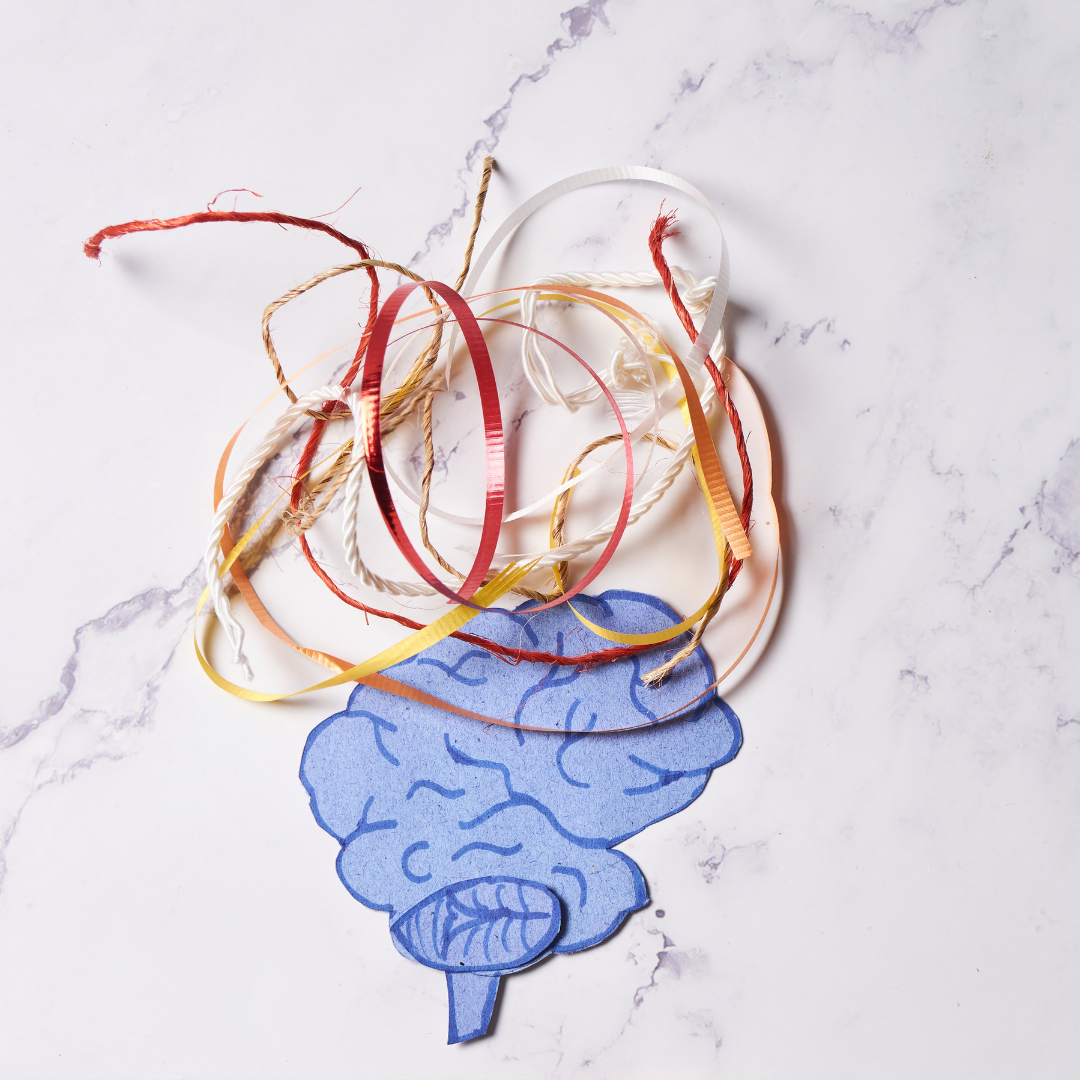
We can have a healthier relationship with worry by living in conversation with our thoughts rather than being ruled by them.
The human train of thought can be chaotic. If we start to identify ourselves through the sum of our thoughts, then we will inevitably fall out of balance because our thoughts are not a perfectly purpose-built machine. They are a bowl of spaghetti being eaten by a ravenous dog in the street. But we are not our thoughts.
Our thoughts are questions we must answer, like the sound of our wakeup alarm or the ringing of the bell at last call. Information that can inform our decisions, but does not make them for us.
Where We Go Wrong With Worry: How To Recognize Your Feelings When You’re Overwhelmed
Anxiety is not just an emotion, it’s a set of behaviors and thought patterns that we can recognize and interrupt. This is at the core of the work we do in Cognitive Behavioral Therapy.
When we interrupt our old ways of thinking, our brains adapt to the new pattern because the brain is unfixed, changeable, and plastic. Our brain naturally wants to do things the way they’ve been done before, but we are not beholden to the way we did things in the past.
If we can recognize the symptoms of unhelpful and maladaptive worry, we can respond to them accordingly. With the right tools, we have the power to rewire our thinking, and stop worrying so much about everything all the time.
- Rumination. Tell me if this sounds familiar: You make a mistake, undertake an embarrassment, or otherwise experience something unpleasant that sticks in your craw. More intense than just regret, this is the feeling of obsessive remorse to the point of distraction. It’s in the metaphorical rearview, but you can’t keep your eyes on the road ahead. This is rumination; a repetitive fixation on unpleasant thoughts.
- Negative Self-Talk. Our inner monologues are often comprised of the cruelest and least compassionate thoughts we experience all day. They are often the mind echoing things we heard said about ourselves or others. This is a behavior that causes us great distress. It can interfere with otherwise happy or productive moments, and leave us feeling only more entitled to mock, denigrate, and hurt ourselves. But this is a behavior. This is something we can choose to do, and something we can choose not to do. If you have realized that you are often derailed and dysregulated by negative self-talk, then you can begin to do things in a different way.
- All-or-Nothing Thinking. Forcing ourselves to complete a task even when it knowingly hurts us, putting others on a pedestal even when they give us no reason to, and removing ourselves from the complicated things that bring us joy are all painful symptoms of all-or-nothing thinking. When we are anxious, we experience the stresses of survival mode. It makes a certain amount of sense to make black and white judgments when our primary concerns are the basic terms of our survival. But because reality is somehow even more complicated than the affairs of the human heart, all-or-nothing thinking rarely aligns with reality the way it feels like it should.
How To Communicate When No One Understands You

When we are misunderstood, it consists of two fundamental elements:
The perceptions of others, which are somewhat unknown to us, and are frustratingly almost entirely out of our control.
And our own feelings and behaviors, which we are wholly responsible for, and are frustratingly almost entirely within our control.
In counseling, we learn how to take responsibility for our own feelings. If we are to take our share of the responsibility for being misunderstood, how can we work to find understanding from others?
- Stop Martyring Yourself When It’s Unnecessary Self-Sabotage That Only Fuels Your Own Self-Pity. There really are ways that we can sacrifice that meaningfully impact others. The mother who feeds her child and starves herself, the men on the sinking ship loading women and children into the lifeboats. These situations are tantalizingly romantic, so much so that we sometimes pretend we are in them. We starve ourselves when there’s food in the fridge, and push away when we feel vulnerable so nobody else has to handle it. This mentally absolves us of guilt by becoming a victim of our life instead of an active participant, but it only fuels a vicious cycle of people-pleasing behavior when in reality you’re pleasing in no way and to no one.
- Manage Your Emotions When You’re Having A Conversation. Being angry, scared, sad, or surprised might give context to your behavior, but it does not excuse it nor give you purchase to toxically accept the problem your feelings are trying to help you recognize. If we want to give others the best chance to understand us, that means behaving like an adult who is not made into a maniac by their emotions.
- Step Towards Intimacy Instead Of Away. There are subtle ways that we reject intimacy in our lives. We avoid quiet moments, only socialize in crowds, or do all of our talking online for a reason. Intimacy is not something exclusive to our romantic life, it’s a fundamental pillar of human wellbeing. When we are intimate, we are vulnerable, and when we are vulnerable but taken care of, we can intuitively feel safe enough to connect with others.
How Anxiety Treatment Can Turn Your Worry Into Constructive Action

Getting anxiety treatment is where you learn the techniques that experts use to manage anxiety. This is not learning how to put a band aid on your emotions, this is going to school to become an emotional field medic for yourself.
You will not be so consumed by worry that it ruins your life. You will feel your worries, and they will be a frustrating part of your day, like lifting a heavy garbage bag or getting a spam phone call. Some of these worries you will lift and let go when you bring them to the proper place, and some of them you will glance at for a moment, then satisfyingly reject it like you’re swatting a fly.
Therapy Can Help You Get Out Of Your Head
One of the most effective tools we learn in therapy is mindfulness.
That means being in the present moment, instead of all those imperfect, beautiful, but impossible to reach moments whenever else. By the way, that can take a lot of work.
Sometimes mindfulness comes to us naturally. Certain subjects might draw it out of us like love or music or dancing.
What we learn in therapy is how to use our intuitive ability to be mindful and accept the present moment whenever we need it.
- Going for a leisurely walk around the block. Paying attention to the world around you. Stepping into your body and not ignoring your sensory experience.
- Achieve maximum effort. Running as fast as you can, lifting something as heavy as you can, doing something that challenges and occupies your mind and body one hundred percent.
- Do what you would have done as a child. Play a game with another person. Pattycake, rock-paper-scissors, or competing for sport in any way that is tangible but frivolous.
- Eat something. What’s in your fridge? What’s in your pantry? Is there something you can eat right now, so you can think more clearly?
How Anxiety Relief Helps You Move Out Of Survival And Into A New Life
When our anxiety is treated, and when we learn how to take care of this animal we are, then we don’t have to live our lives in a high-stakes life-or-death game of survival.
Imagine how far you could go if your legs were not so tired from running. How high would you jump if you knew confidently that you could land on safe ground? How much could you accomplish if you knew it could be possible?
Anxiety Therapy For Men And Women In St. Petersburg
Through individual therapy, you can begin to understand your relationship with anxiety, recognize the patterns that keep your anxiety going, and develop new ways of responding to stress and uncertainty. Rather than trying to stop worrying altogether, you will feel more equipped to navigate difficult thoughts and situations without being consumed by them.
If you’re feeling stuck on your healing journey, you don’t have to navigate it alone. Our intake specialist will take the time to understand your needs and connect you with a therapist who is the right fit.
Schedule your free 15-minute consultation.
 Sunny Ebsary is an educator, multi-modal artist, and writer specializing in the intersection of myth and mental health. Sunny’s writing walks the line between poetic and logical, giving readers a chance to interface with the mind and imagination. Sunny’s been putting pen to paper since he was a child, writing everything from albums, novels, and plays, to essays, interactive games, and of course, many articles! While studying both psychology and writing, he realized his real passion in life was helping others unlock their creative spark. Whether he’s leading a D&D game, directing a production, or diving deep into the brain, you can be sure Sunny will be ushering you toward finding meaning in your life.
Click here to book a consultation call and start navigating your personal path to mental harmony with a therapist who gets you. Your journey, your pace, your story—let's unfold it together.
Let's keep the conversation going.
Feeling the spark to light up your wellness journey?