
Imperfect Art Heals Your Brain
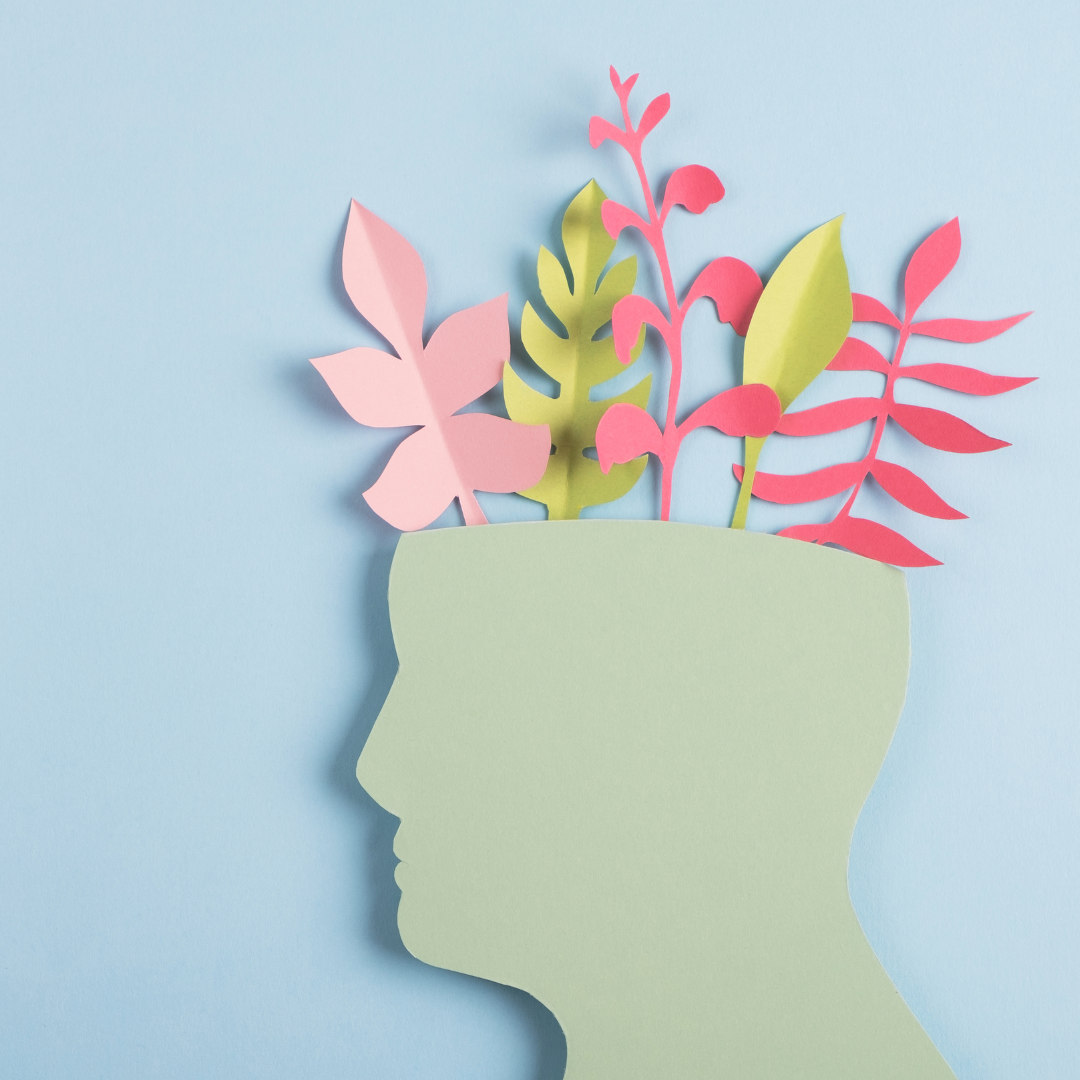
If you’re looking for a way to improve your life, art can be a great answer. Unfortunately, art is one of those answers that raises a thousand other questions.
How do you feel worthy enough to deserve the materials you’re working with? How do you stay motivated to be artistic when the process gets difficult? What is the secret to making art and actually feeling good about it?
There’s a reason that more and more therapists are using art in their practice. It’s because art is worth every challenge it presents, and all the questions it raises in your heart are worth answering.
Answering the call within to be an artist is not easy. Being an artist requires practice, failure, success and the ability to learn from all of the above.
So let’s learn. It’s time to do art therapy like an artist, and that means you’re doing something important whether it’s perfect or not.
How Do You Start Making Therapeutic Art?
“It took five minutes, and my entire life.”— Trina Paulus paraphrasing James McNeill Whistler on how long it takes to make a piece of art.
What I love about this quote is that while it tells you the truth no matter which phase of being an artist you’re in, what that truth is changes with each segment of your journey.
- Art can take as little as five minutes. The blank page is perhaps the most intimidating canvas to make our mark upon. When I’m starting out, I manage my overwhelm by doing something small. Something I could certainly complete in a finite amount of time (like five, ten, or even fifteen minutes if you’re feeling frisky), with the freedom to continue if I desire. Art need not be big, high-effort, or complex to be worthwhile or meaningful. If your choice is between making art for five minutes, or not at all, then let’s make art for five minutes.
- Your art encompasses your entire experience up to that point. And this happens whether we like it or not. Your art is not just a reflection of its subject, it is a reflection of you, the artist. You cannot draw a flower without touching the type of person who would notice the details you render. There is no subject without observation, and there is no observation without a well-appointed observer.
- Time spent does not equal meaning earned. Art is challenging. Art takes time. Both of these things are true. You would think that the higher the challenge, and the greater your time investment, the more beautiful your work will become. Wrong. You do not need to work a hundred hours on your painting for it to be good, or even a masterpiece. These attributions of value are rarely the result of raw materials like paint, paper, or even yes, time. Art is valuable for the personal element you bring to it; the spark of life borrowed from your lived experiences and translated into meaningful form through art.
That gap between what you imagined and what actually appears on the page can be frustrating. For someone with OCD, it can also activate the part of the mind that insists things need to be perfect, certain, or just right.
Can Art Therapy Get Through To People With OCD?
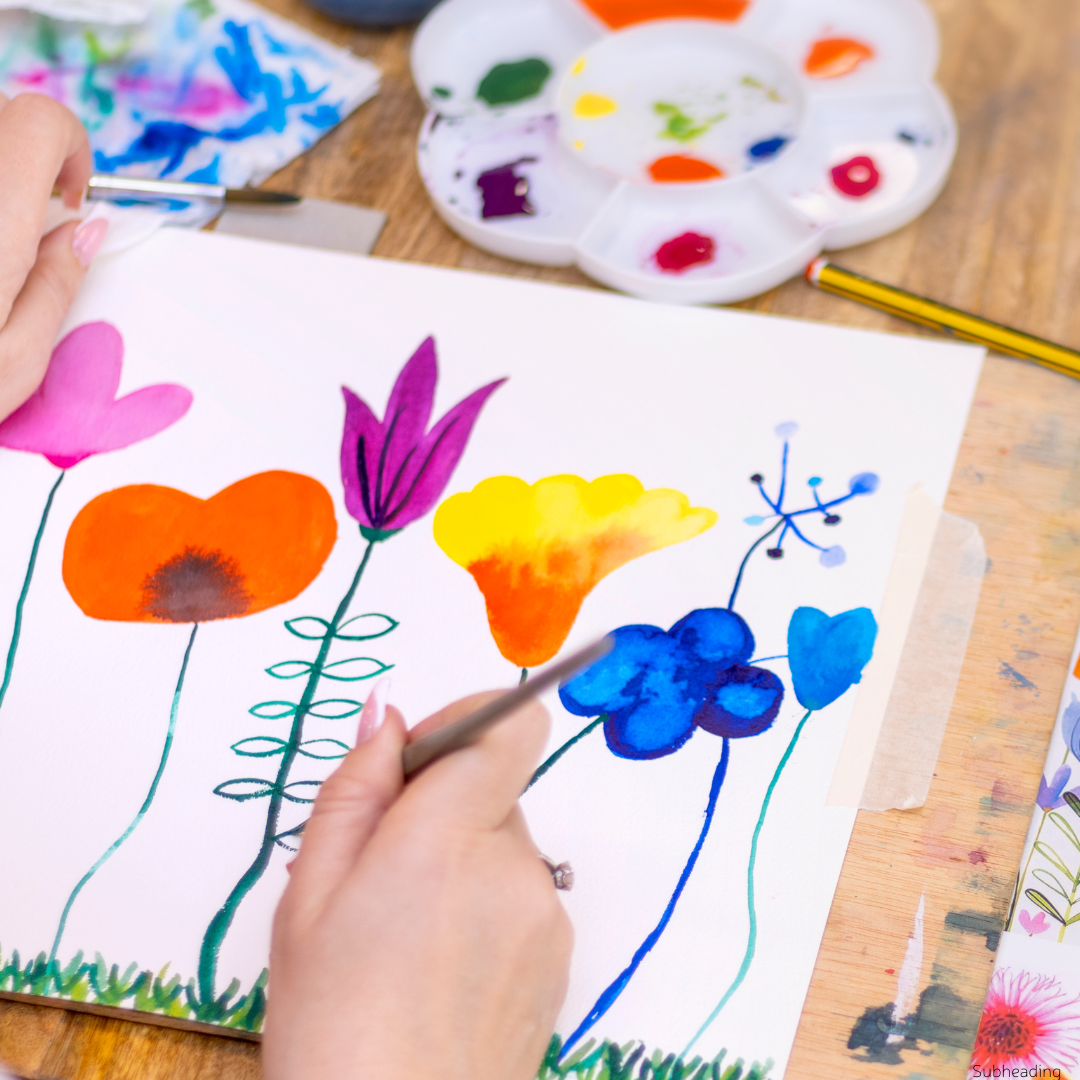
“Making art naturally exposes you to the discomfort of the unknown. You don’t know if what you put on your canvas will turn out to be like what you imagined in your head. Having an image in your mind of what you want something to look like, and then creating something that you perceive to be uglier than what you imagined is frustrating. For someone with OCD, it can also activate the part of the mind that insists things need to be perfect or certain.
In this way, art therapy can create opportunities to practice tolerating uncertainty and imperfection. You don’t know exactly how a piece will turn out. You can’t always control what happens once you put something on the page. You may make a choice you don’t like, make a mistake, or create something that doesn’t match the image in your head. And rather than correcting, erasing, or starting over, you can practice allowing the discomfort to be there.
Art also gives those internal experiences somewhere to go. Instead of only talking about the inner critic, perfectionism, or the need for certainty, you can actually watch those processes unfold on the canvas. You can notice the moment you want to erase something. You can observe the thought that says, “This isn’t good enough,” or “I need to fix this.” And you can become curious about what happens when you choose not to give into the compulsion.
There is also something uniquely powerful about making “ugly” art. The goal isn’t to make something beautiful or even meaningful. Sometimes the therapeutic work is allowing yourself to make something imperfect and showing yourself that you can tolerate the discomfort.” Alli Cravener, Registered Mental Health Counseling Intern
While research on art therapy and OCD remains limited, numerous case studies, and my own anecdotal experiences suggest that it is a powerful tool for observing your own thoughts, a safe inconsequential space for resisting your compulsions, and a gateway into conversation with your inner critic.
Where Can I Find Art Therapy Resources In St. Petersburg, FL?
Art therapy should be for anyone, whenever they need it. That includes you. That includes right now.
At Integrative Counsel, we pride ourselves on providing quality art therapy services within your means. That might look like the free art therapy prompts and activities on our site like these, but it also means providing affordable counseling that can meet you where you are.
- Your DIY Art Therapy Options In St. Petersburg. Our guide to DIY art therapy walks you through several ways to make art part of your mental health practice without needing to attend a formal art therapy session. We also go into the special artistic opportunities you can find specifically in St. Petersburg.
- Some Art Therapy Prompts For Better Awareness. Being an artist means including sensory details; describing or representing the things we can hear, see, taste, smell, and touch. That means no dissociation allowed! This collection of art therapy prompts is designed to help you become more aware of what’s happening inside you. The exercises ask you to explore things like your current emotional state, the sensations you notice in your body, the different parts of yourself, and the things you may be carrying without fully realizing it.
- Our Art Therapy Resources For Depression. Making art when you’re depressed can be difficult precisely because depression can make everything feel difficult. This resource offers creative exercises specifically for those moments, including prompts for putting sadness onto the page, drawing what depression feels like, using color to represent your emotional state, and making something even when you don’t feel particularly creative. Art doesn’t cure depression, but it does give it somewhere to go.
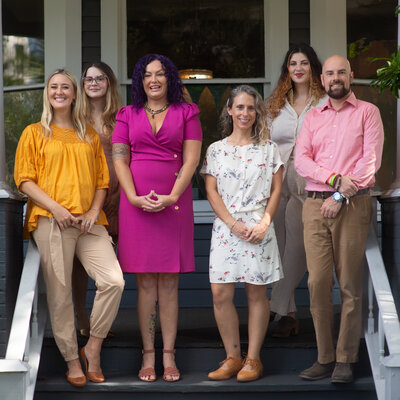
- See Therapist Who Uses Art Like Alli Cravener. If you want to take creative art therapy beyond DIY exercises, you can also work with a therapist. At Integrative Counsel, Alli Cravener uses the creative arts in therapy to help clients explore emotions and experiences that may be difficult to express through conversation alone. Working with an art therapist gives you the structure and support of counseling while still leaving room for creativity, experimentation, and discovery. For people in St. Petersburg, FL who want to explore art therapy with a professional, Alli is one of the clinicians you can turn to.
What If My Art Isn’t Good?
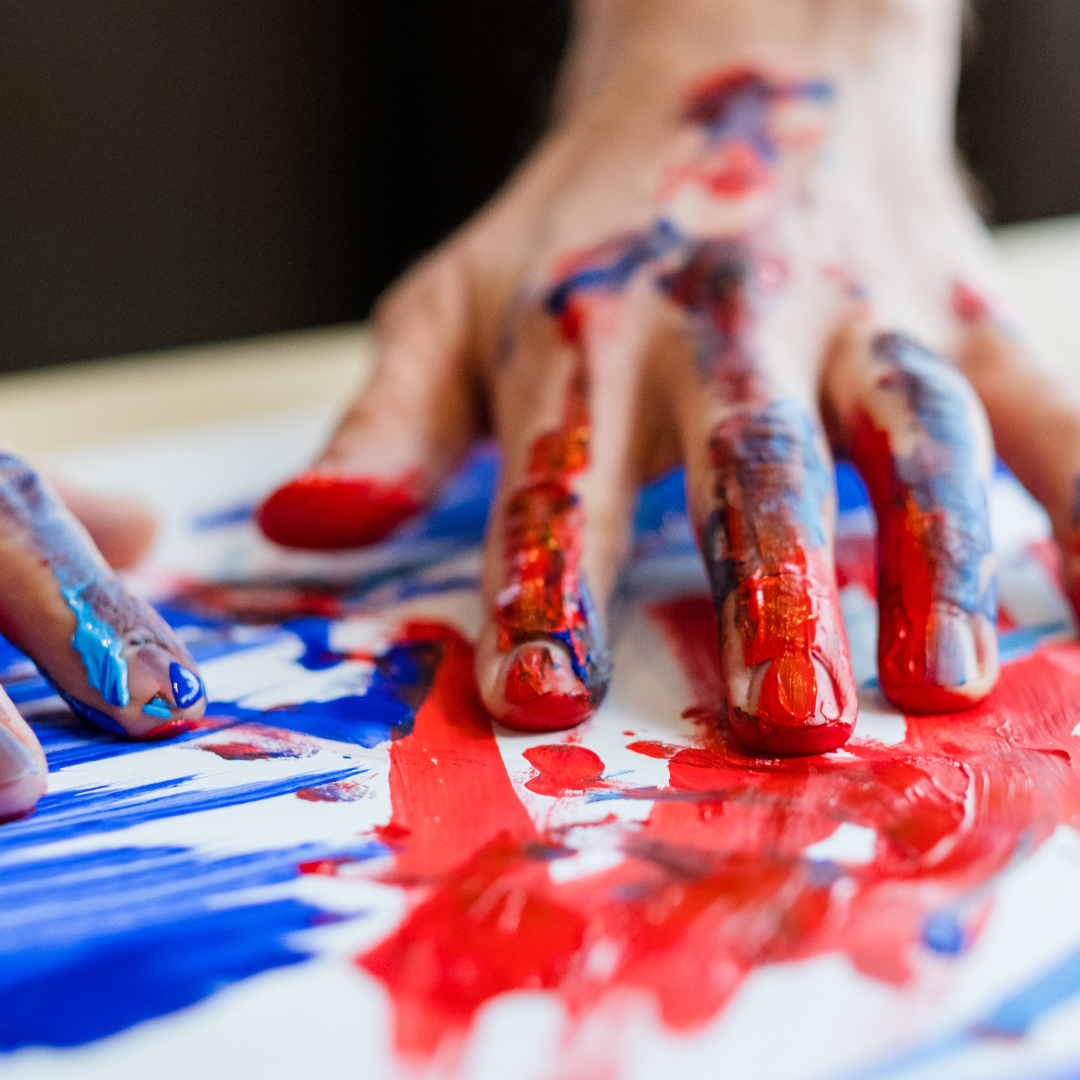
This is what I try to remind myself of when I’m lost in doubt, or overwhelmed at the thought of making something bad. I recommend we all remind ourselves of this if we’re serious about being an artist.
What if your art doesn’t need to be good?
When it comes to making art, there are many things that are more important than succeeding. People made art before they invented money, baked bread, or tamed horses. I posit that this is because art is as important to the human process as eating, drinking, breathing, and loving.
Art is how we process. Art is how we find challenge and enjoyment where there once was nothing. Art is how we explain the otherwise inexplicable, and find the otherwise unfindable.
We deserve that no matter what the end product looks like.
How Can Your Counselor Help You Unlock Your Artistic Potential?
Creativity is your birthright. It is not some rare gift bestowed upon only “real” artists or creative geniuses. Being human is inherently creative. We are constantly creating, imagining, problem-solving, expressing, and making meaning from our experiences.
Your counselor can help you reconnect with that natural creativity by creating a space where you can experiment without judgment, make mistakes without shame, and create without worrying about whether the end result is “good.”
The therapy room—and your therapist—provide a container for you to unlock your artistic potential. You don’t have to buy a bunch of art supplies, figure out what you need, set everything up, or clean everything up afterward. You just show up.
Sometimes the hardest part of making art isn’t the creating itself, it’s just getting started.
In therapy, the logistics are already taken care of. The supplies are there. The space is ready. There’s no pressure to make something impressive or to know what you’re doing. You simply get to sit down, make art, and see what emerges from what you have created.
If you’re feeling stuck on your healing journey, you don’t have to navigate it alone. Our intake specialist will take the time to understand your needs and connect you with a therapist who is the right fit. Schedule your free 15-minute consultation.
 Sunny Ebsary is an educator, multi-modal artist, and writer specializing in the intersection of myth and mental health. Sunny’s writing walks the line between poetic and logical, giving readers a chance to interface with the mind and imagination. Sunny’s been putting pen to paper since he was a child, writing everything from albums, novels, and plays, to essays, interactive games, and of course, many articles! While studying both psychology and writing, he realized his real passion in life was helping others unlock their creative spark. Whether he’s leading a D&D game, directing a production, or diving deep into the brain, you can be sure Sunny will be ushering you toward finding meaning in your life.
Click here to book a consultation call and start navigating your personal path to mental harmony with a therapist who gets you. Your journey, your pace, your story—let's unfold it together.
Let's keep the conversation going.
Feeling the spark to light up your wellness journey?