

Be Authentic at Work

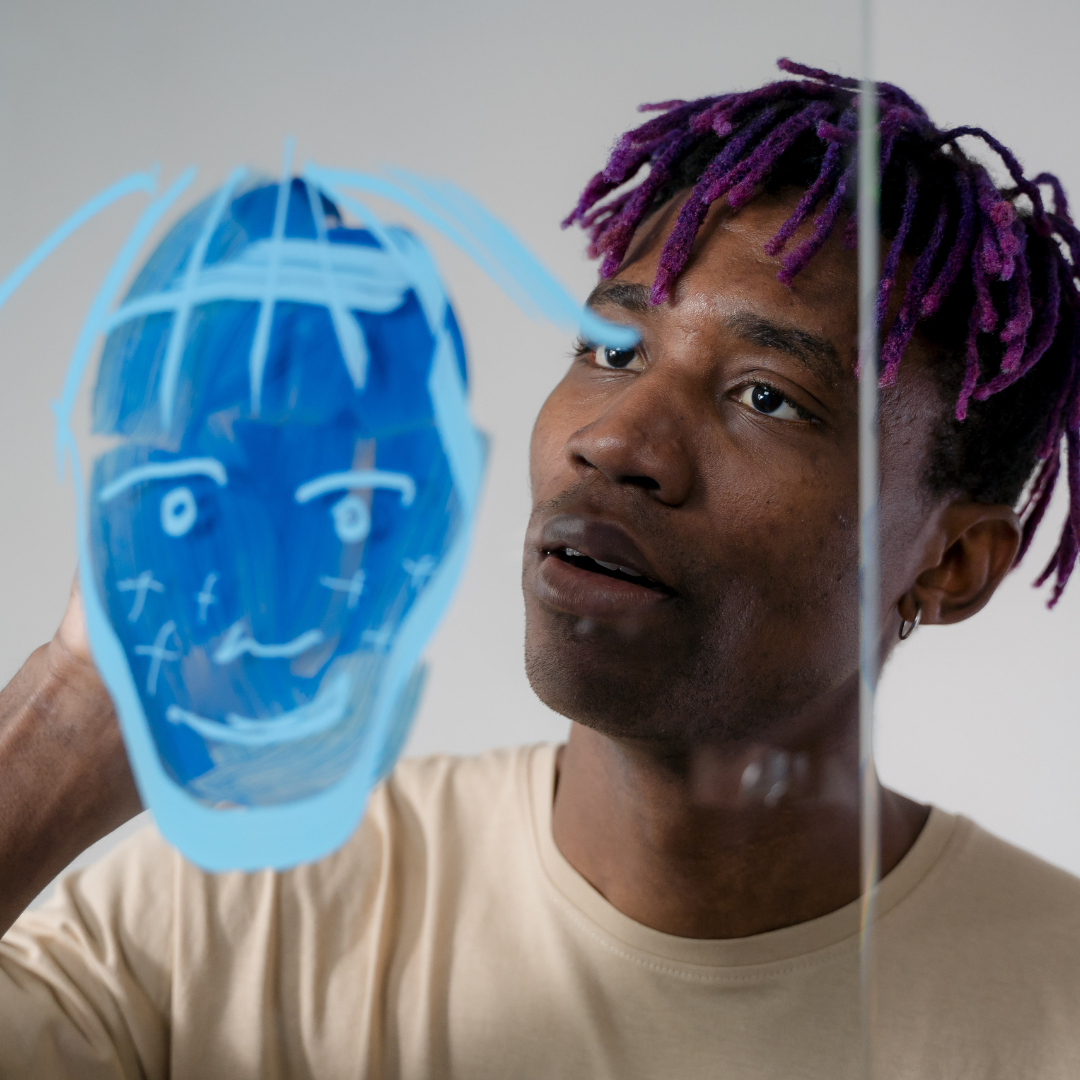
When we live our lives behind a mask, we permit nobody else to know our authentic self. We forbid all who might criticize, compliment, like, love, or hate us from ever passing judgment by hiding behind a persona. This is, in moderation, healthy.
But it requires that we eventually take off the mask and act as ourselves. After all, it is our individuality and our perspective that we are trying to preserve by wearing it. If our mask is an uncomfortable cage we consign our true self within, then what are we really protecting?
Unmasking is not just for Batman, nor should it be reserved for the facial set we purchased from TJ Maxx. It is a necessary part of being known, and a skill worth learning.
“The persona is a complicated system of relations between individual consciousness and society, fittingly enough a kind of mask, designed on the one hand to make a definite impression upon others, and, on the other, to conceal the true nature of the individual.” — Carl Jung, The Relations Between the Ego and the Unconscious
Why Should I Bother Being Authentic At Work?

Do you really need to be authentic at work? There are serious risks to professional authenticity that can make it more frightening to be yourself than it is to wear (and hide behind) a mask. Being authentic is vulnerable. It is challenging. It can be frightening.
But to wear the mask forever, or even most of the time, is to live a life afraid to be yourself. There is, after all, a middle ground between acting differently at work and completely burying the real you to make a living.
So, what is it that motivates us to be authentic in the workplace?
- It is less exhausting. Constantly monitoring yourself, adjusting your personality, and worrying about whether you are performing the “right” version of yourself takes energy. If we bring our authentic selves to work, we can worry about things like whether or not we do a good job instead of whether or not our incredibly believable mask looks like a real face and not like a mask at all.
- It is inevitable. It is the only way to do it long-term. There is no mask that was made to be worn forever, and we all eventually feel the sting of inauthentic success. When our words are lauded, our work is appreciated, and our persona is successful, it somehow feels empty. If the persona had failed, we might retreat to our authentic selves as a matter of logical testing (Ii.e. because this did not work, then I must try something entirely different) but when the mask is accepted, it stands to reason that our authentic self is not accepted. And so, whether or not our persona is useful, we must learn how to live beyond the mask.
- It is more rewarding. If inauthenticity is sure to embitter our success, then what happens if we do the opposite? If we lead our lives based on who we really are, what is the effect? Succeed or fail, we do it as our authentic selves. If we fail, we do not need to begrudge the things that were beyond our capability of doing because we have love for ourselves and acceptance of our limitations. If we are loved, it is because of who we really are, not who we wished we could be to fit in.
What Does It Look Like To Be Unmasked?
“To confront a person with his shadow is to show him his own light.”— Jung, Civilization in Transition
 We’ve all felt secondhand shame when people unmask themselves at the wrong time. Someone crying in public, or a couple having an emotional confrontation in a busy restaurant are both figures of interest and of disgust. They are breaking the social contract, and for that we are at once:
- Grateful, because it is they and not we who are violating “the rules”.
- Jealous, for their ability to transgress is something we cannot imagine for ourselves.
- Resentful, for why should they be the ones who get to break the unspoken rules when you can vividly remember all the times we ignored what we truly wanted just so we could keep wearing the mask.
All of these feelings are valid. They are each helpful for the information they can potentially provide. If we hear what these sensations are trying to tell us, we can start to meet our needs in a better way.
Authenticity does not mean becoming the person who cries in every meeting or tells your boss exactly what you think at every opportunity even when it’s inappropriate. It means becoming more honest about what is happening inside you and finding appropriate ways to let that reality inform your life.
That might mean:
- Being honest about your feelings. You don’t have to announce every emotion, but you should be able to acknowledge and validate to yourself what you are actually feeling.
- Acknowledging and accommodating your sensory experience. If your environment is overwhelming, uncomfortable, distracting, or exhausting, that information matters. Don’t expect yourself to behave comfortably in an environment that is 10/10 uncomfortable.
- Allowing yourself to be vulnerable. Taking off the mask means opening yourself up to both connection and disapproval. You cannot control how everyone responds to the real you. However, this vulnerability is the only way to feel truly accepted.
- Finding acceptance for who you really are. More and more adults are recognizing that they are neurodivergent. That means finding self-acceptance is more vital than ever. Being neurodivergent means that you are operating in a society that does not naturally accommodate you. If we have acceptance for our own feelings, needs, and blindspots, we can accommodate ourselves with grace and love. If we fail to accept our own needs, we will always struggle to meet them.
How Can Neurodivergent People Unmask At Work?
So you’ve acknowledged that you need to do something different. Perhaps you’re neurodivergent, perhaps you’re in the closet, or perhaps you just never prioritized authenticity.
Whoever we are and whatever we have, we all deserve to be comfortable in our own skin. The good news is, we can start right now.
So, if we’re ready, what are the actionable steps we can take to be ourselves at work?
- Share stories about your life outside work. The truth is, work is part of your life. There need not be a complete delineation between the person we are at home and the person we are at work. Sharing the right stories about your hobbies, your family, or your interests is a professional but authentic way to let your co-workers see the real you.
- Be truthful and honest. Don’t tell other people you’re fine when you’re dying of discomfort. Have integrity in your work, and don’t compromise in an attempt to please others. Know your limitations and don’t overpromise to make yourself look good. Being “the guy” at work is great, but only if you’re actually the guy you say you are.
- Ask for help. If something seems like too much, start collaborating! You don’t need to carry it on your own. Just find the person who can help, and be brave enough to ask them.
- Respect your own boundaries. A boundary is a line in the sand that has a consequence when others cross it. This does not mean something that we have asked for, nor does it mean a line in the sand that you merely don’t want other people to cross. It is that consequence (and our ability to enforce it) that allows us to respect our own boundaries.
How To Handle Rejection When You’re Unmasked

Being unmasked is not all sunshine and roses. At times, it can be difficult. There will be moments where you must continue to be yourself, even when that is the last person in the world you’d wish to be.
When you know what’s in your toolkit and when to use it, these difficult moments are just that: moments.
- Be aware of your own stress response. Before you make a permanent decision based on the feelings in your body, it’s important to recognize how you personally respond to stressful situations. Do you go into fight or flight? Do you tend to freeze up during confrontation? Do you jump to people pleasing to smooth over the situation? This isn’t just your personal history, it’s valuable information, and it’s up to you to synthesize it into hard-earned wisdom.
- Give yourself compassion because this hurts. Let’s be honest: this was not the best case scenario for authenticity. We do it to be loved as our authentic selves, not to be rejected for who we really are. While this ultimately protects us from being in relationships with people who don’t accept us, in the short term it is demoralizing and painful to have our authentic self be turned away. This is an important process, but also a difficult one.
- Stay firm in the things that matter. The thing that will keep you afloat during rejection, or any other deep, dark, sinking feeling, is simple: create systems that you can rely on. These are your acts of daily living, like brushing your teeth and eating enough food, but these are also the values we hold, the rituals we perform, and the things we believe in. When we hold fast to these, we bolster our resilience, and tell our bodies that this is not a catastrophe.
- Be flexible in your approach. Authenticity does not mean stubbornness. You can remain true to yourself while changing your strategy, learning from criticism, or recognizing that you made a mistake.
- Be a vulnerable participant in your life, not an idle victim. Attitude is everything. There is no world where we can be an authentic participant in our lives and also a complete victim of our own environment. Being authentic means accepting our limitations, but it also requires that we take real responsibility for the things that are in our control.
Can Therapy Help Me Feel Less Ashamed Of My Authentic Self?
“Everyone carries a shadow, and the less it is embodied in the individual’s conscious life, the blacker and denser it is.”— Jung, Psychology and Religion
Often, underneath the shame we feel about certain parts of ourselves is a fear of rejection.
When you have spent years adapting yourself to what other people expect from you, authenticity can feel unsafe. You may know intellectually that you want to live more authentically while still feeling anxiety, guilt, or shame when you actually try to do it.
Therapy can help you create a wider container for those feelings. The goal isn’t necessarily to eliminate your fear of rejection before you allow yourself to be authentic. Instead, you can learn how to hold that fear, understand where it comes from, and choose to be yourself even when vulnerability is present. Over time, you can begin separating who you genuinely are from who you learned you needed to be in order to feel accepted.
With a therapist, you can explore the parts of yourself you have hidden, judged, , or abandoned and begin asking whether they actually deserve the shame you have been carrying around them.
If you’re feeling stuck on your healing journey, you don’t have to navigate it alone. Our intake specialist will take the time to understand your needs and connect you with a therapist who is the right fit.
Schedule your free 15-minute consultation.
 Sunny Ebsary is an educator, multi-modal artist, and writer specializing in the intersection of myth and mental health. Sunny’s writing walks the line between poetic and logical, giving readers a chance to interface with the mind and imagination. Sunny’s been putting pen to paper since he was a child, writing everything from albums, novels, and plays, to essays, interactive games, and of course, many articles! While studying both psychology and writing, he realized his real passion in life was helping others unlock their creative spark. Whether he’s leading a D&D game, directing a production, or diving deep into the brain, you can be sure Sunny will be ushering you toward finding meaning in your life.
Click here to book a consultation call and start navigating your personal path to mental harmony with a therapist who gets you. Your journey, your pace, your story—let's unfold it together.
Let's keep the conversation going.
Feeling the spark to light up your wellness journey?